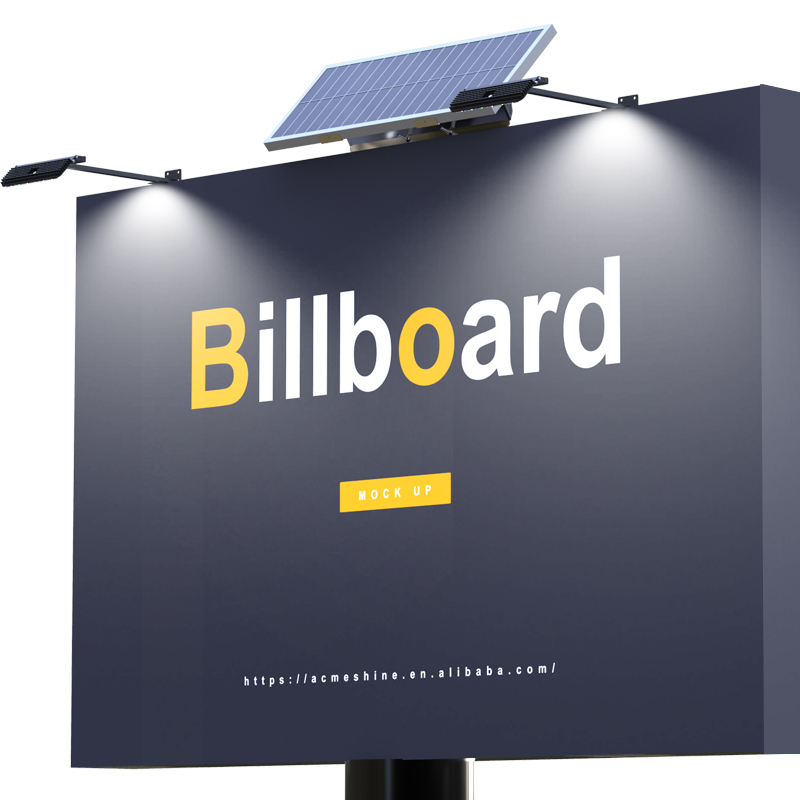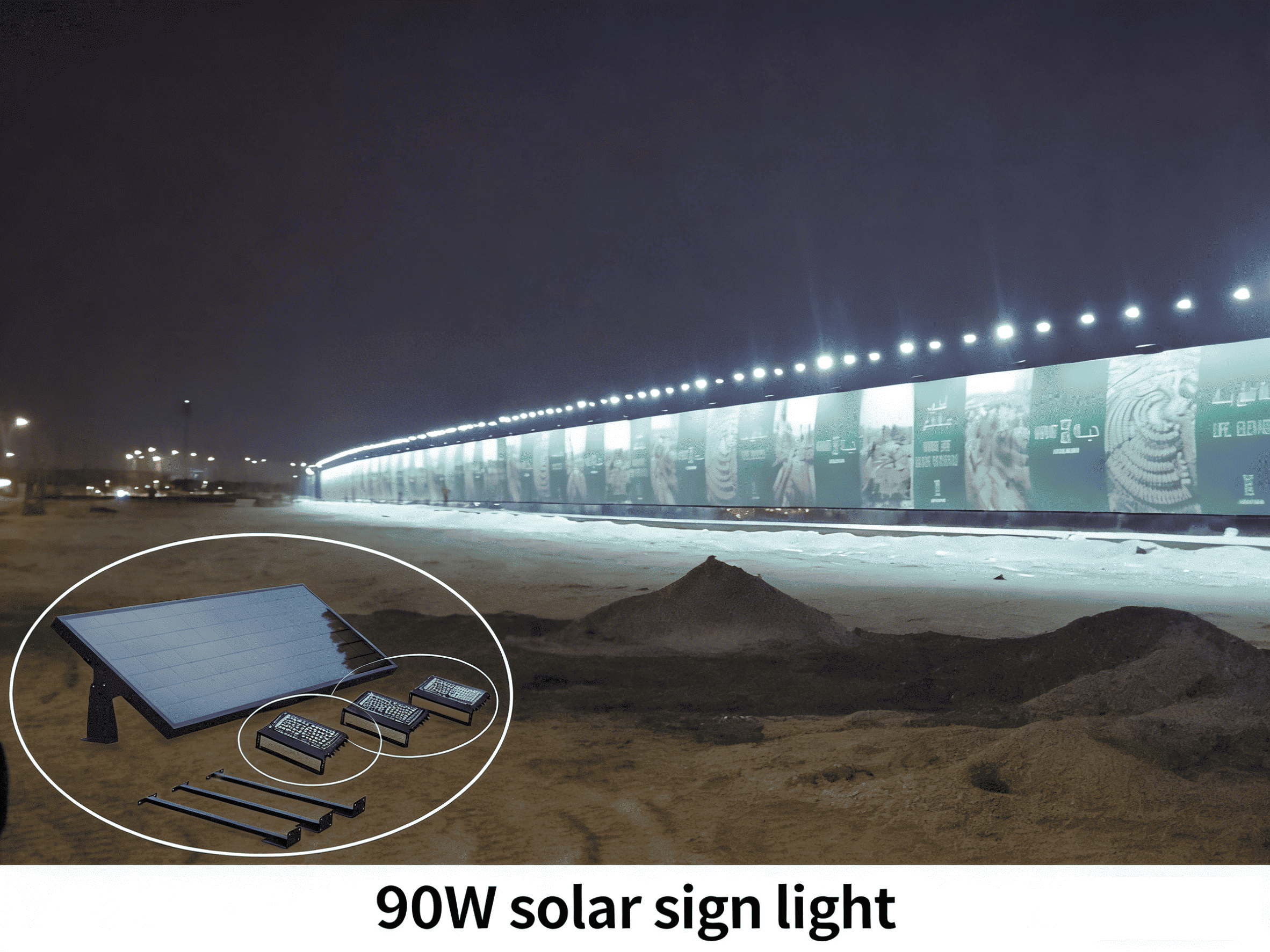
Dedicated Solar Sign Lights vs General Solar Flood Lights: Which Is Better for Outdoor Signs?
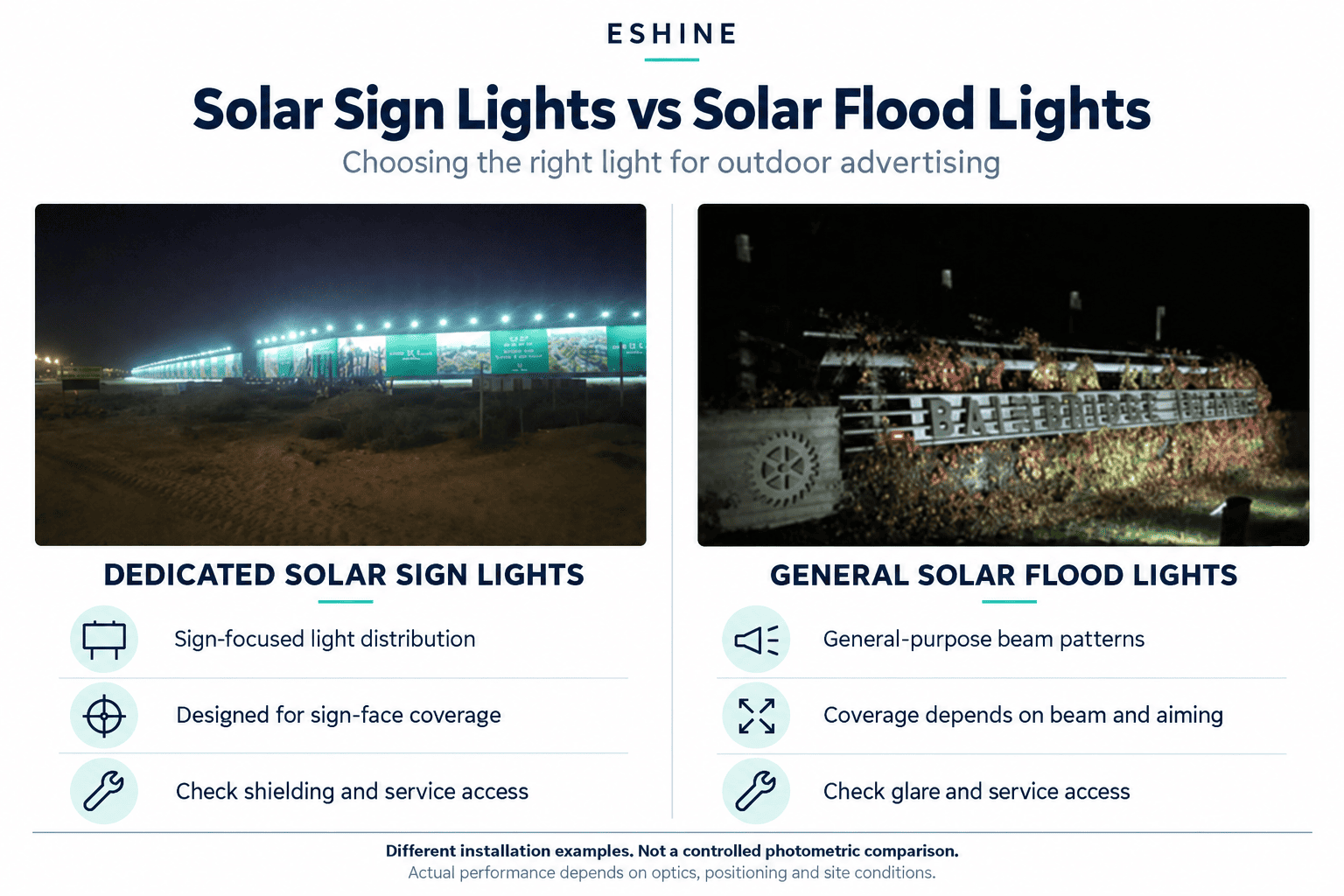
Choosing lighting for an outdoor sign involves more than comparing wattage. A fixture may look bright when viewed directly, yet leave parts of a billboard unevenly illuminated or spill light beyond its edges.
When comparing solar sign lights vs solar flood lights, the key question is how effectively each fixture directs light onto the sign face. Uniformity, glare control, coverage, and maintenance access all influence the final result.
For advertising companies, sign installers, and commercial property owners, understanding these differences can help identify a suitable solution for each project.
What Is the Difference?
Dedicated solar sign lights are designed specifically to illuminate signboards, advertising panels, and other vertical displays. Depending on the model, they may use elongated housings, purpose-designed lenses, adjustable brackets, or shielding to direct light across the sign face.
General solar flood lights serve a broader range of applications, including yards, building exteriors, and security areas. They can also illuminate signs, provided their beam distribution and installation position suit the sign’s dimensions.
The product category alone does not guarantee performance. The optical design, mounting arrangement, and solar energy system must work together.
| Comparison Point | Dedicated Solar Sign Lights | General Solar Flood Lights |
|---|---|---|
| Illumination uniformity | Sign-specific optics can help distribute light across a rectangular display. | A mismatched beam may create a bright center and darker edges. |
| Glare control | Suitable shielding and aiming can help limit direct views of the LEDs. | Glare depends on fixture design, aiming, and viewer position. |
| Lighting coverage | Can be selected and positioned around sign width, height, and mounting offset. | May require different optics, greater setback, or multiple fixtures. |
| Maintenance | Service access depends on component layout and installation height. | The same factors apply; accessibility should be checked before purchase. |
1. Illumination Uniformity: Make the Whole Message Visible
A sign needs consistent illumination across its text, logo, and background. Excessive brightness in one area can make darker sections less noticeable, even when the fixture produces a high total light output.
Dedicated sign lights with suitable optics can help spread light across the display. This is particularly useful for wide signs where a centrally mounted floodlight may not reach the corners effectively.
However, uniformity also depends on the distance between the fixture and the sign, its aiming angle, and the spacing between multiple lights.
For a meaningful comparison, measure illuminance at several points across the sign face. Check the center, edges, and corners rather than relying on one central lux reading.
2. Glare Control: Keep Attention on the Sign
Viewers should notice the advertising message without being distracted by exposed, bright LEDs.
Glare can become a concern when a fixture points toward normal viewing positions instead of concentrating light on the sign. Nearby pedestrians, drivers, and neighboring properties should all be considered when selecting the mounting position.
Dedicated solar sign lights may incorporate shielding or controlled optics to reduce unwanted light. General solar flood lights can also perform well when equipped with suitable optics and aimed correctly.
A useful on-site check is to view the installation from several typical approach directions. Inspect both the visibility of the sign and whether the light source is uncomfortably bright.
3. Lighting Coverage: Match the Beam to the Sign
A wider beam does not automatically provide better sign lighting. Light falling above, below, or beside the sign does little to improve the visibility of its message.
Effective LED sign lighting distribution should match the sign’s proportions and mounting geometry.
For a long, narrow sign, an elongated fixture or several carefully spaced lights may provide a suitable layout. A taller billboard may need a different beam pattern, mounting offset, or arrangement of fixtures.
When selecting solar billboard flood lights, provide the supplier with:
-
Sign width and height.
-
Available mounting positions and distance from the sign face.
-
Required lighting hours.
-
Installation location and solar panel exposure.
-
Nearby viewing areas where glare or spill light should be limited.
These details are more useful than selecting a fixture by wattage alone.
4. Maintenance: Consider Access and Replaceable Components
For elevated signs, maintenance may involve a lift, access equipment, and installation labor. These costs should be considered alongside the initial fixture price.
Neither a dedicated sign light nor a general floodlight is automatically easier to maintain. Compare the actual construction and service procedure.
Check whether the battery and controller can be replaced, how electrical connections are protected, and whether spare parts are available. Also consider access for cleaning the solar panel and inspecting brackets and fasteners.
An integrated design can simplify installation by reducing external wiring. A split design can offer more freedom to position the solar panel in sunlight while placing the lamp where it best illuminates the sign. The best choice depends on the site.
How to Compare Real-World Lighting Results
A useful photographic comparison requires controlled conditions. Use the same sign, camera position, exposure, white balance, and ambient lighting. Record the fixture models, mounting positions, lighting modes, and battery charge conditions.
Photograph each lighting system separately. Avoid automatic exposure adjustments, which can make two different lighting results appear artificially similar.
For a fixed-position comparison, keep mounting geometry consistent. If each system is installed in its recommended position, disclose those differences so readers understand the comparison.
Photos can illustrate the appearance of the sign, but they do not establish precise uniformity or glare performance. Add a grid of illuminance readings where possible, and compare operation over the required lighting period.
Which Type Should You Choose?
Dedicated solar sign lights are worth considering when a project requires a layout specifically designed around a sign’s shape, viewing directions, and mounting constraints.
General solar flood lights can also be suitable where their beam pattern and installation arrangement provide adequate coverage and acceptable glare control.
In either case, select the complete system around the required lighting hours and local solar conditions. A bright initial appearance is only part of the requirement; the sign also needs adequate illumination throughout its scheduled operating period.
Discuss Your Solar Sign Lighting Project with ESHINE
ESHINE offers dedicated solar sign lighting options for outdoor advertising boards, commercial signs, and real estate signage, including integrated and split designs.
Send us your sign dimensions, installation photos, project location, and required lighting hours. Our team can recommend a suitable fixture arrangement and provide relevant specifications for your evaluation.
Explore our solar sign light range at www.eshinesolarlightfactory.com.
Solar Billboard Lights Buying Guide | Eshine