
What Solar Street Lights Are Suitable for Coastal Areas? A Complete Guide to Salt Spray Protection and Anti-Corrosion Design
Why Coastal Areas Require Special Solar Street Lights?
Installing solar street lights in coastal areas is more challenging than in normal environments.
Seaside locations, islands, and tropical regions usually face harsh conditions including:
- High humidity
- Strong UV exposure
- Salt spray corrosion
- Sea wind erosion
- Temperature changes
- Long-term outdoor exposure
For these environments, a standard solar street light may experience problems such as:
- Metal corrosion
- Screw rusting
- Housing oxidation
- Poor electrical connection
- Reduced product lifespan
Therefore, choosing the right coastal solar street light requires careful consideration of materials, surface treatment, hardware components, and overall anti-corrosion design.
1. Solar Street Light Housing Material: Why Aluminum Alloy Is the Best Choice for Coastal Areas
The housing material is the first factor affecting corrosion resistance.
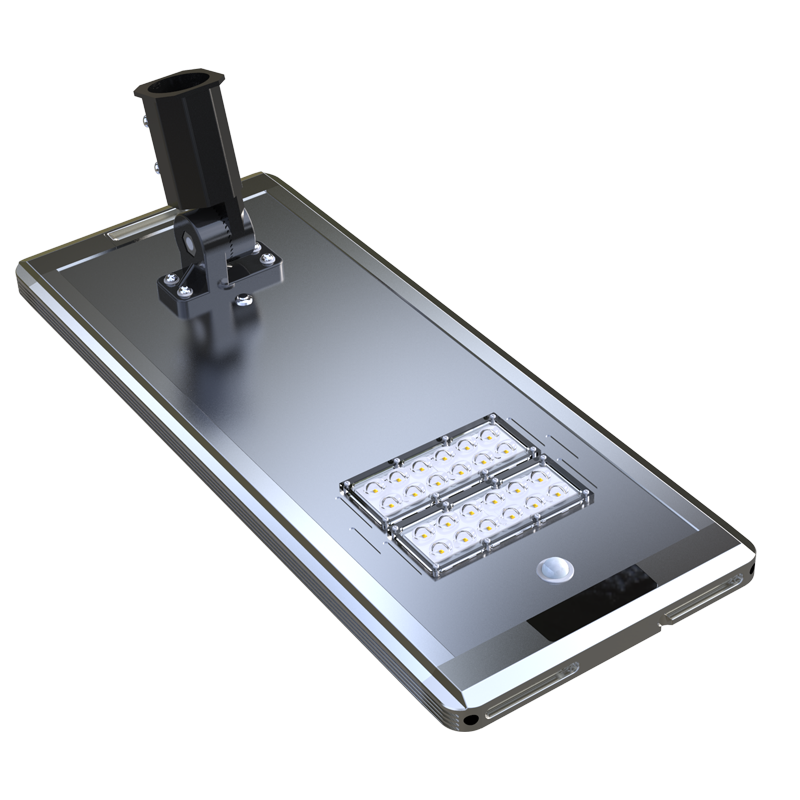
Aluminum Alloy Solar Street Light
High-quality aluminum alloy is widely used in marine and coastal solar lighting applications because of its excellent properties:
Excellent Corrosion Resistance
Aluminum naturally forms a protective oxide layer on its surface, which helps prevent further corrosion.
Compared with steel materials, aluminum alloy provides:
✔ Better resistance against moisture
✔ Better resistance against salt spray
✔ Longer outdoor service life
✔ Lower maintenance requirements
For coastal solar street lights, a full aluminum alloy structure provides better protection than ordinary iron or steel housings.
Why Avoid Normal Steel Housing?
Steel solar street light housings require additional anti-rust treatment. In coastal environments, once the coating is damaged, salt water can quickly penetrate and cause corrosion.
Common problems include:
- Rust around mounting areas
- Surface peeling
- Reduced mechanical strength
- Shorter product lifetime
For seaside projects, especially islands and tropical countries, aluminum alloy is a more reliable choice.
2. Surface Treatment: Powder Coating and Oxidation Protection
The surface finishing process directly affects the durability of solar street lights.
Powder Coating for Coastal Solar Street Lights
High-quality outdoor powder coating provides:
- UV resistance
- Weather resistance
- Salt spray protection
- Better surface durability
However, coating quality depends on:
- Powder material
- Coating thickness
- Pretreatment process
- Production environment
A professional solar street light factory should apply strict surface preparation before powder coating.
The process usually includes:
- Cleaning
- Degreasing
- Surface treatment
- Powder spraying
- High-temperature curing
This improves coating adhesion and prevents peeling in humid coastal environments.
Oxidation Treatment (Anodizing)
For some aluminum alloy components, anodizing can further improve surface protection.
Advantages:
- Creates a harder oxide layer
- Improves corrosion resistance
- Enhances surface stability
For high-end coastal solar lighting projects, combining aluminum alloy + advanced coating technology provides better long-term protection.
3. Solar Street Light Screws and Fasteners: Small Parts Make a Big Difference
Many solar street lights fail in coastal environments because of poor-quality screws.
Although screws are small components, they directly affect the reliability of the entire system.
Recommended Screw Materials for Coastal Areas
Stainless Steel 304
Suitable for:
- General outdoor environments
- Residential coastal areas
Advantages:
- Good corrosion resistance
- Cost-effective
- Strong mechanical performance
Stainless Steel 316
For harsh marine environments, stainless steel 316 is a better choice.
It contains molybdenum, which provides stronger resistance against:
- Chloride corrosion
- Salt spray
- Sea air exposure
Recommended for:
- Islands
- Beaches
- Ports
- Offshore areas
4. Preventing Electrochemical Corrosion Between Different Metals
One often overlooked issue is the contact between different metal materials.
For example:
- Aluminum housing
- Stainless steel screws
When different metals directly contact each other in a humid salt environment, galvanic corrosion may occur.
To solve this problem, professional solar street light manufacturers use protective designs such as:
Insulating Washers and Gaskets
Between screws and aluminum surfaces, manufacturers can install:
- Rubber washers
- Nylon washers
- EPDM sealing rings
- Anti-corrosion gaskets
These components help:
✔ Reduce direct metal contact
✔ Prevent galvanic corrosion
✔ Improve waterproof performance
✔ Extend product lifespan
5. Waterproof and Sealing Design for Coastal Solar Street Lights
Besides corrosion resistance, waterproof protection is also critical.
A reliable coastal solar street light should include:
- IP65/IP66 waterproof protection
- Sealed battery compartment
- Protected cable connectors
- Weather-resistant LED housing
Salt water combined with humidity can accelerate internal component damage.
Good structural design is essential for long-term outdoor operation.
6. Recommended Solar Street Light Type for Coastal and Island Areas
For seaside projects, we recommend:
Full Aluminum Alloy Solar Street Lights
Advantages:
✔ Lightweight structure
✔ Excellent corrosion resistance
✔ Efficient heat dissipation
✔ Long service life
✔ Suitable for tropical and marine climates
For coastal roads, villages, resorts, and island projects, aluminum alloy solar street lights provide stable performance with lower maintenance costs.
Eshine Solar Coastal Solar Street Light Projects
With more than 14 years of solar street light R&D and manufacturing experience, Eshine Solar has supplied reliable solar lighting solutions to island countries and coastal markets worldwide.
Our 30W and 40W full aluminum alloy solar street lights have been widely used in markets including:
- Mauritius
- Puerto Rico
- Reunion Island
- Japan
- South Korea
- Panama
These regions share similar challenges:
- Strong sunlight
- High humidity
- Marine salt exposure
- Long outdoor operation requirements
Our coastal solar street light solutions focus on:
✔ Aluminum alloy housing design
✔ Anti-corrosion surface treatment
✔ High-quality stainless steel hardware
✔ Reliable lithium battery systems
✔ Long-life LED lighting technology
Why Choose Eshine Solar for Coastal Solar Lighting Projects?
As a professional solar street light manufacturer, Eshine Solar provides:
OEM & ODM Solar Street Light Solutions
We support:
- Customized housing design
- Different power options
- Project-based lighting solutions
- Special requirements for coastal environments
Complete Product Range
Including:
- All-in-one solar street lights (20W-120W)
- Split solar street lights
- Dual-head solar street lights
- Bifacial solar street lights
- Solar courtyard and pathway lights
Conclusion: The Best Solar Street Light for Coastal Areas
For seaside and island applications, choosing a solar street light is not only about brightness or power output.
The key factors are:
- High-quality aluminum alloy housing
- Professional powder coating or oxidation treatment
- Stainless steel 304/316 screws
- Anti-corrosion washers and sealing design
- Reliable waterproof structure
A properly designed coastal solar street light can provide years of stable illumination even in harsh marine environments.
With proven experience in Mauritius, Puerto Rico, Reunion, Japan, Korea, and Panama markets, Eshine Solar continues to provide durable and efficient solar lighting solutions for coastal communities and island projects worldwide.
PWM vs MPPT Solar Street Light Controller: What Is the Difference and Which One Is Better?