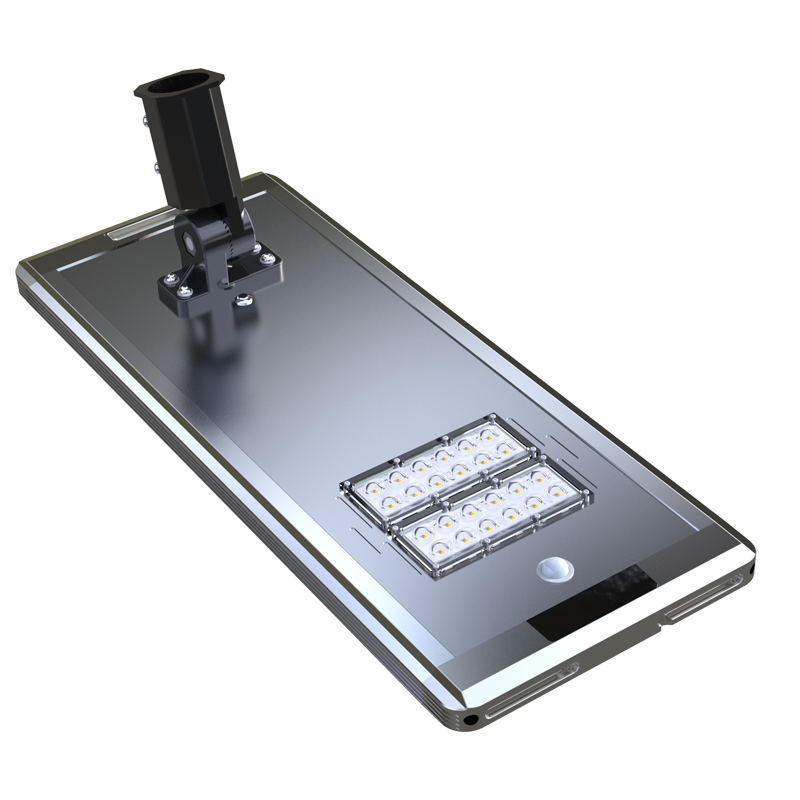
PWM vs MPPT Solar Street Light Controller: What Is the Difference and Which One Is Better?
With the rapid development of solar lighting technology, solar street lights have become a popular solution for road lighting, parking lots, residential areas, highways, and off-grid projects. A key component that directly affects the performance, charging efficiency, and lifespan of a solar street lighting system is the solar street light controller.
Among different types of solar controllers, PWM (Pulse Width Modulation) controllers and MPPT (Maximum Power Point Tracking) controllers are the two most commonly used technologies.
Understanding the difference between PWM and MPPT solar charge controllers helps project developers, distributors, and engineering companies choose the right solar street light system for different applications.
What Is a Solar Street Light Controller?
A solar street light controller is the intelligent management unit between the solar panel, battery, and LED lamp. It controls the energy flow in an off-grid solar lighting system and protects the battery from overcharging, over-discharging, short circuits, and excessive current.
A high-quality solar lighting controller usually provides functions such as:
- Solar panel charging management
- Battery protection
- LED lighting control
- Automatic dusk-to-dawn operation
- Power adjustment
- Remote monitoring (for smart solar street lights)
For modern all-in-one solar street lights, split-type solar street lights, and integrated solar LED lighting systems, the controller plays an important role in ensuring stable illumination and long service life.
PWM Solar Charge Controller for Solar Street Lights
What Is a PWM Controller?
PWM stands for Pulse Width Modulation. A PWM solar controller regulates the charging voltage by rapidly switching the connection between the solar panel and battery.
When the battery reaches a certain voltage level, the PWM controller reduces the charging current to prevent overcharging.
PWM technology has been widely used in traditional solar lighting systems because of its simple structure and affordable cost.
Advantages of PWM Solar Controllers
1. Cost-Effective Solution
PWM controllers have a simpler design and lower manufacturing cost, making them suitable for:
- Small solar street lights
- Residential solar pathway lights
- Garden solar lights
- Low-power LED lighting projects
2. Reliable and Easy Maintenance
Because PWM controllers have fewer electronic components, they offer:
- Stable operation
- Easy installation
- Long service life
3. Suitable for Small Solar Lighting Systems
For solar street lights with smaller power requirements, PWM controllers can provide reliable battery charging performance.
Limitations of PWM Controllers
Although PWM controllers are economical, they have some limitations:
Lower Solar Energy Utilization Efficiency
PWM controllers cannot actively track the maximum power output point of the solar panel. When sunlight conditions change, the solar panel may not operate at its highest efficiency.
Reduced Performance in Cold Weather or Weak Sunlight
Solar panel voltage varies depending on:
- Temperature
- Solar radiation intensity
- Weather conditions
PWM controllers may not fully utilize available solar energy under unstable conditions.
MPPT Solar Charge Controller for Solar Street Lights
What Is an MPPT Controller?
MPPT stands for Maximum Power Point Tracking.
An MPPT solar controller uses advanced electronic technology to continuously detect the solar panel's maximum power point and adjust the charging parameters to achieve higher energy conversion efficiency.
Compared with PWM technology, MPPT controllers can extract more power from the solar panel, especially in environments with changing sunlight conditions.
Advantages of MPPT Solar Controllers
1. Higher Charging Efficiency
The biggest advantage of MPPT technology is improved solar energy harvesting.
Compared with PWM controllers, MPPT controllers can achieve significantly higher charging efficiency, especially when:
- Solar panel voltage is higher than battery voltage
- Temperature changes frequently
- Solar radiation is unstable
This makes MPPT an excellent choice for high-performance solar street lighting systems.
2. Better Performance in Harsh Environments
MPPT solar controllers perform well in:
- High latitude regions
- Cold climates
- Cloudy weather conditions
- Areas with limited sunshine hours
They maximize available solar power to ensure longer nighttime lighting.
3. Suitable for High-Power Solar Street Lights
MPPT controllers are widely used in:
- High-power solar street lights
- Engineering solar lighting projects
- Highway solar lighting systems
- Commercial parking lot lighting
- Large-scale off-grid solar lighting applications
For solar street lights above 60W, MPPT technology can provide better system efficiency.
PWM vs MPPT Solar Controller Comparison
| Feature | PWM Solar Controller | MPPT Solar Controller |
|---|---|---|
| Technology | Pulse Width Modulation | Maximum Power Point Tracking |
| Energy Efficiency | Medium | Higher |
| Solar Energy Utilization | Standard | Optimized |
| Cost | Lower | Higher |
| System Size | Small solar lighting systems | Medium and large solar systems |
| Performance in Weak Sunlight | Average | Excellent |
| Suitable Solar Street Light Power | Low wattage models | High-power solar street lights |
| Installation Complexity | Simple | More advanced |
| Battery Charging Performance | Good | Better |
Which Solar Controller Is Better for Solar Street Lights?
The choice between PWM and MPPT depends on the application, budget, solar resources, and lighting requirements.
PWM Controller Is Suitable For:
- Residential solar courtyard lights
- Small pathway solar lights
- Low-power LED solar lamps
- Projects with sufficient sunlight and lower budget requirements
For example, cost-effective solar courtyard street lights with features such as:
- Dual CCT lighting options
- Battery indicator
- Wide beam angle design (148° × 126°)
can effectively use PWM control technology for reliable daily lighting.
MPPT Controller Is Recommended For:
- Engineering solar street light projects
- Parking lot solar lighting
- Highway lighting systems
- High-power solar LED street lights
- Areas with limited sunlight
MPPT technology helps improve battery charging efficiency and provides more stable lighting performance throughout the year.
Why Controller Technology Matters for Solar Street Light Performance
A solar street light system includes several important components:
- Solar panel
- Lithium battery
- LED light source
- Solar charge controller
- Lighting management system
Even with a high-efficiency solar panel and long-life lithium battery, an unsuitable controller can reduce overall system performance.
A reliable solar controller helps achieve:
✔ Longer battery lifespan
✔ More stable nighttime lighting
✔ Better solar energy utilization
✔ Reduced maintenance costs
✔ Higher return on investment
Choosing the Right Solar Street Light Manufacturer
As a 14-year R&D-focused solar street light factory, Eshine Solar specializes in designing and manufacturing advanced solar lighting solutions, including:
- All-in-one solar street lights (20W-120W, 4 different designs)
- Split-type solar street lights
- Dual-head solar street lights for parking lots and engineering projects
- Bifacial solar street lights with double-sided power generation
- Cost-effective solar courtyard and pathway lighting solutions
All Eshine solar street lights are developed with the latest solar technology to provide:
- Reliable illumination
- Long lifespan
- Easy installation
- Competitive pricing
- OEM/ODM customization services
With professional R&D capability and manufacturing experience, Eshine Solar provides customized solar LED lighting solutions for distributors, contractors, and global engineering projects.
Conclusion: PWM or MPPT — Choose the Right Solar Controller for Your Project
Both PWM and MPPT solar controllers have their own advantages.
PWM controllers offer a cost-effective solution for small and residential solar lighting systems, while MPPT controllers provide higher efficiency and better performance for demanding solar street light applications.
When selecting a solar street light system, consider the project location, solar conditions, lighting power requirements, and long-term operating costs.
Choosing the right controller technology ensures your solar street lights deliver reliable, efficient, and sustainable lighting for years.
Keywords:
solar street light controller, PWM solar charge controller, MPPT solar charge controller, MPPT vs PWM solar controller, solar LED street light system, off-grid solar lighting system, lithium battery solar street light, intelligent solar lighting controller, solar street lamp manufacturer, solar street light factory, OEM solar street lights.
What Solar Street Lights Are Suitable for Coastal Areas? A Complete Guide to Salt Spray Protection and Anti-Corrosion Design